What Happens When Fashion Starts with Waste? Exploring Oscar Munro’s Design Philosophy
Exploring Oscar Munro’s Design Philosophy
By Marymartha Danczuk
“You never know what you’re going to end up with… or what you end up making,” Oscar Munro tells me. A fashion design graduate and alumnus of Manchester Fashion Institute, Munro is a designer who challenges the conventions of fashion production by embracing its remnants, not just typical deadstock, but repurposed sailcloth, hot air balloon off-cuts, overlooked industrial materials, and exhibition banners sourced from leading art institutions across the region.
Designing with the Unexpected
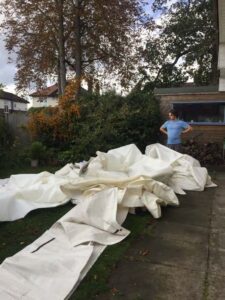
Munro’s work is defined by a balance of craft, sustainability, and spontaneity. Rather than imposing a fixed vision, he lets the unpredictable nature of waste materials guide his creative process. For him, repurposing isn’t just a sustainable choice, It’s a source of inspiration. Whether crafting one-off accessories or bespoke garments, each piece begins as a dialogue with the material, responding to its quirks and hidden possibilities.
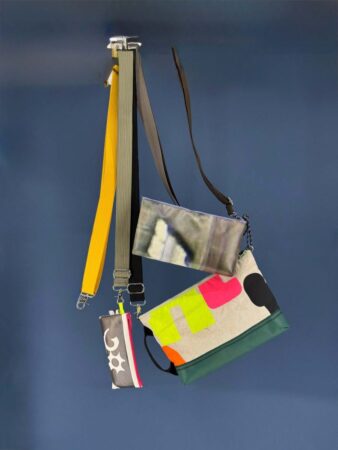
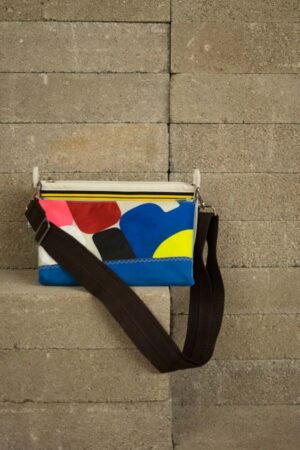
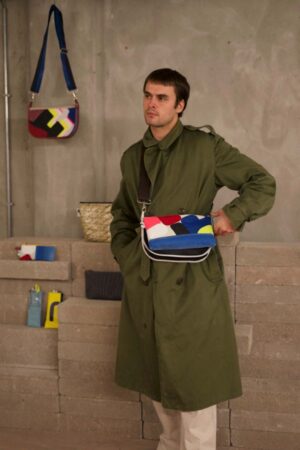
That philosophy laid the foundation for two distinct lines: the mainline label, Oscar Munro, and its more agile counterpart, YoYo. Instead of a traditional brand hierarchy, the two collections reflect the rhythm of his practice. YoYo operates on a commission-led model, producing adaptable accessories from excess exhibition materials and Munro’s own sourced deadstock, think repurposed sailcloth and hot-air balloon fabric transformed into one-off designs. This approach enables faster turnarounds and commercial collaborations while staying true to sustainable values.
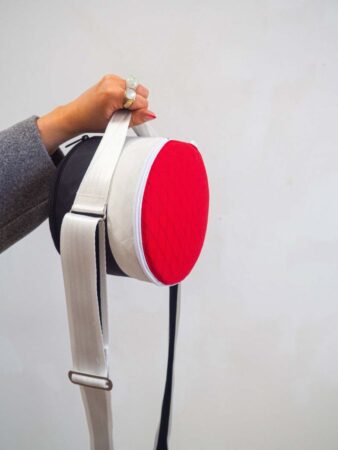
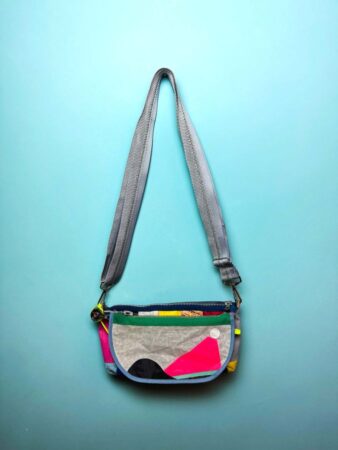
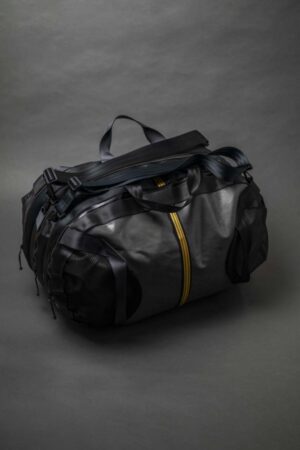

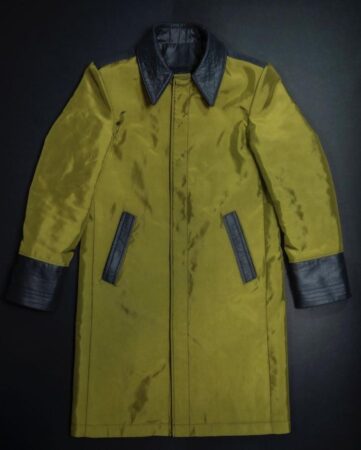
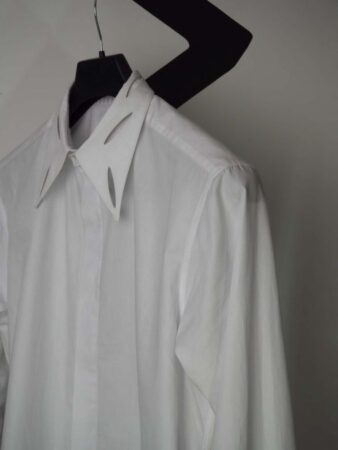
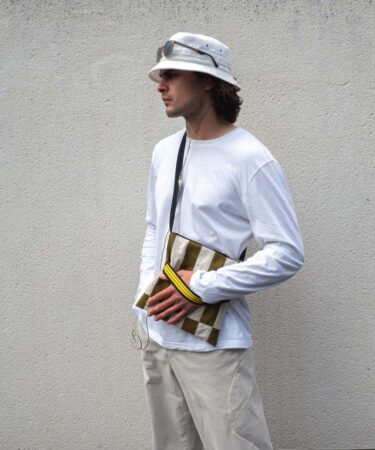
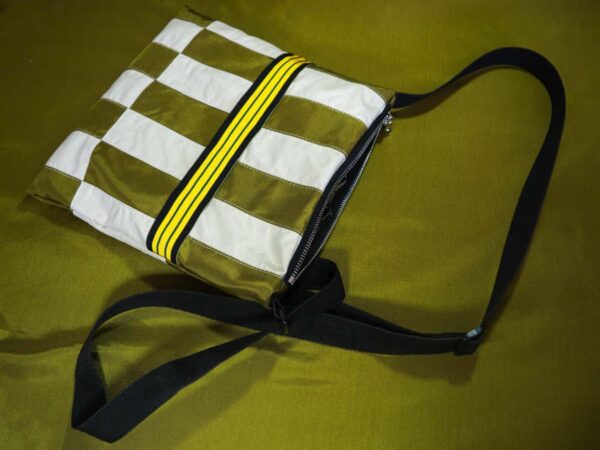
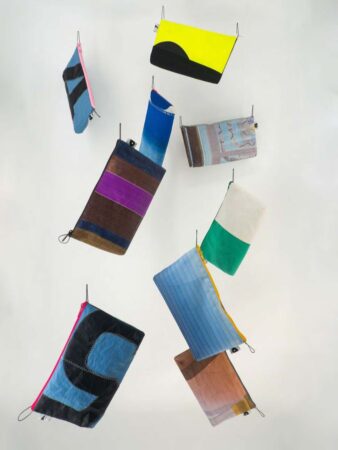
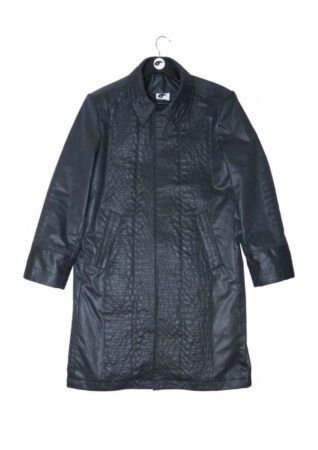
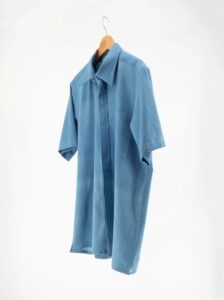
In contrast, Oscar Munro is intentionally slow, built around bespoke, made-to-order garments that demand time and precision. A defining example is the ‘Suntoucher’ shirt, crafted from denim chambray stock once displayed in the tailor’s shop where Munro worked. Rolled and left to absorb sunlight, the fabric developed natural, accidental dye patterns, each fold catching light differently, creating a piece that embodies his ethos of patience and purpose. Originally considered unsellable and destined for the bin, Munro saw potential in its imperfection. He salvaged the cloth and released a micro-collection of just five shirts, each bearing a unique sun-washed signature. The collection was supplied exclusively to UNDERFOUND in Altrincham.
As a natural extension of this philosophy, Munro’s approach to his audience remains refreshingly fluid. Rather than targeting a fixed demographic, he lets the dual-brand structure guide how each product finds its wearer. He describes a responsive relationship between design and consumer: the YoYo range, like the ‘Jenny’ bag, tends to attract a female audience, while the Oscar Munro ‘Belter’ bag leans more masculine. Munro’s ambitions go beyond conventional segmentation. “I really want to tap into the kind of market I relate to as well,” he adds.
Building a Brand from Community
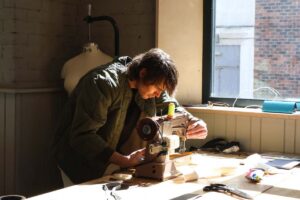
After University Munro’s creative journey was catalysed by his involvement with ōH Creative, a Chester-based design foundation known for its ethos of “Open Home.” What began as a stroll into a pop-up shop, where he spotted jackets by Bepo, quickly evolved into a transformative experience. After speaking with the store team, Munro was invited to take part in a maker’s weekend, bringing his sewing machine into the studio and becoming a resident designer. “Without that I definitely wouldn’t be where I am today,” he reflects. The store grew organically, attracting more creatives and eventually relocating to a larger space in the heart of Chester, so iconic that it even hosted a wedding.
The ōH Collective became a hub for Chester’s creative community, championing local talent like Jonathan Edwards, Felt Mistress, Bepo, and many more independents, “There were seven machines in the back of the store,” Munro recalls, “and we were selling in-store, taking bespoke orders.” The ōH Creative website served as a stepping stone for many, including Munro, whose practice matured through this collaborative environment.
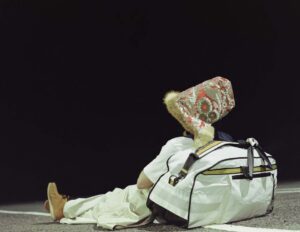
Yet Munro’s collections are just one part of the story, what emerged during our conversation was a deeper understanding of the designer himself. Beyond being instinctive, spontaneous and material-led, Munro is increasingly attuned to the ecosystems around him, both creative and communal. Once defined by the unpredictability of waste, Munro’s practice has evolved into a more structured rhythm, now shaped through collaborations with art institutions, where discarded exhibition banners become the raw material for new creative possibilities.
Munro’s recent partnerships with institutions like the Chester Cathedral, Tate Liverpool, Manchester Art Gallery and The Hepworth Gallery, has seen the designer explore a new business model. His work with Chester Cathedral emerged from his Chester network. Monica, the founder at ōH, connected Munro with the cathedral’s team, who offered him unused banners. “He said that we’ve got some banners – could you use them?” Munro recounts.
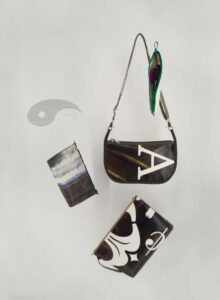
The resulting designs, abstract prints featuring stained glass imagery and religious symbols, formed the basis of his Jenny bags and marked a leap forward in his product development. Each piece was entirely unique, shaped by the irregularities of the repurposed fabric. In these imperfections, one can glimpse fragments of cathedral-stained glass and familiar architectural details, reimagined from a fresh perspective. The vivid colour palettes, subtle pixelation, and mesh-like textures lend each design a captivating, tactile quality that completes its visual story.
A chance encounter at the Tate further propelled this new chapter. A friend wore one of Munro’s bags to the gallery, catching the eye of a buyer. “He did me proud and said where it was from,” Munro says. That led to his first major order, a restock, and sightings of his work across Liverpool. “I learned so much in the Tate one,” he adds, noting how using his own product helped him refine its design and prepare for larger-scale production
Most recently being commissioned to rework the Unpicking Couture exhibition banners from the Manchester Art Gallery. This collection will see the giant outdoor marketing banners, featuring some of the couture pieces inside its exhibition, transformed into a one-off YoYo limited collection, timed to coincide with the gallery’s upcoming sustainability exhibition due to launch next year 2026, and to be sold in their gallery store, allowing visitors to celebrate the beauty of this much loved exhibition.
“I love going to the actual galleries themselves and getting a sense of the atmosphere there: the kind of style, the staff, the café. That really plays into the design,” Munro explains. His approach turns each repurposed banner into part of a layered dialogue, one that blends gallery and exhibition identity with his own visual language.
“Each gallery’s DNA is on the banner… the font they use, the way it’s laid out. My job is to create a composition that’s in keeping with their style”
This sensitivity to context carries through to the materials Munro works with. By reworking exhibition banners into functional products, his approach questions how we assign value to materials. “To most people, what I make my product out of is worthless, but seatbelts, for example, have amazing properties.” For Munro, sustainability isn’t a buzzword, but a key part of his design process. As he puts it, “The best compliment is when someone doesn’t know the product is made from repurposed material and they just love it anyway.”
Craft, Collaboration, and the Future
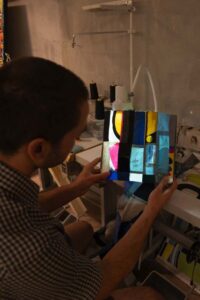
Munro’s connection to community and material continues through his involvement in Manchester’s creative scene, particularly at The Yard, a collaborative workspace where he’s expanded his role beyond designer to mentor and technician. “Since I joined The Yard, I’ve been working with charities, doing workshops… I never asked to do that, but just being there, meeting new people, it opened a lot of doors.”
This spirit of exchange is also evident in his work with students and interns. “You can’t just tell people how to use this material; you have to show them how.” These interactions subtly reshape his own perspective, reinforcing the idea that design is always a shared act.
“Every time you meet someone, you get new perspective… it defines your own perspective ever so slightly each time.”
In terms of his plans, Munro hopes to do a runway show. He’s now working on an upcoming collection — one which has been in development since his university days. Munro finds himself at a moment of creative release, with future ambitions to reimagine the runway not merely as a space for presentation, but as a platform for advocacy.

“Fashion needs a clear spokesperson driving the industry forward in the right way,” he says. The right way? For some designers, this might simply be about putting out more collections to an even wider audience. For Munro, he hopes that fashion can reach a more sustainable future, hoping to lead by example, showing that function, emotion, and responsibility can coexist in compelling ways. For Munro, entering, and staying in the fashion industry comes down to refining your craft. “Keep sewing or learn to sew really well: [become] the best you can be,” he advises.
In a saturated market, where originality can feel elusive, Munro sees technical ability as the foundation for building something authentic and meaningful. He also stresses the importance of collective alignment in an industry often shaped by corporate agendas. “Get behind brands that you align with and that have good ethics,” he urges.
According to Munro, real impact happens when individuals not only hone their own practice but actively engage with the ecosystems they want to transform. And at the heart of it all is a belief in craft as a tool for transformation. As he puts it “If you learn this amazing craft, you can reuse all this stuff that’s seen as worthless and make money from it… that’s what I want to show people.”