In an industry driven by speed, Maito Design Works offers something rare: a meaningful connection to tradition, nature, and the future. Founded by designer Maito Komuro, the brand using centuries-old dyeing techniques at scale, something which demands skill on the part of the person dyeing the fabrics and is immensely time-consuming.
These methods demand time, precision, and deep expertise, qualities often at odds with modern production. Yet Komuro has found a way to bridge past and future: by fusing centuries-old Japanese dyeing techniques with cutting-edge WHOLEGARMENT® knitting technology, he’s created a model of sustainable fashion that’s both technically innovative and emotionally resonant, Maito is not just producing garments; they are telling stories. Carving out a distinctive space in sustainable fashion.
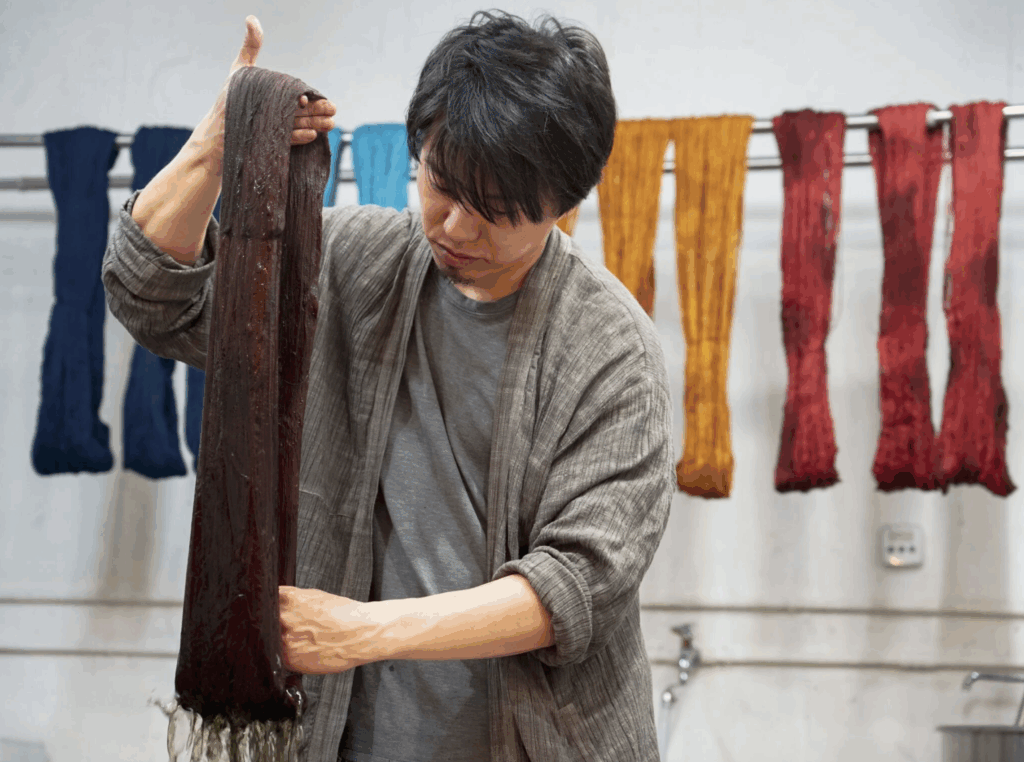
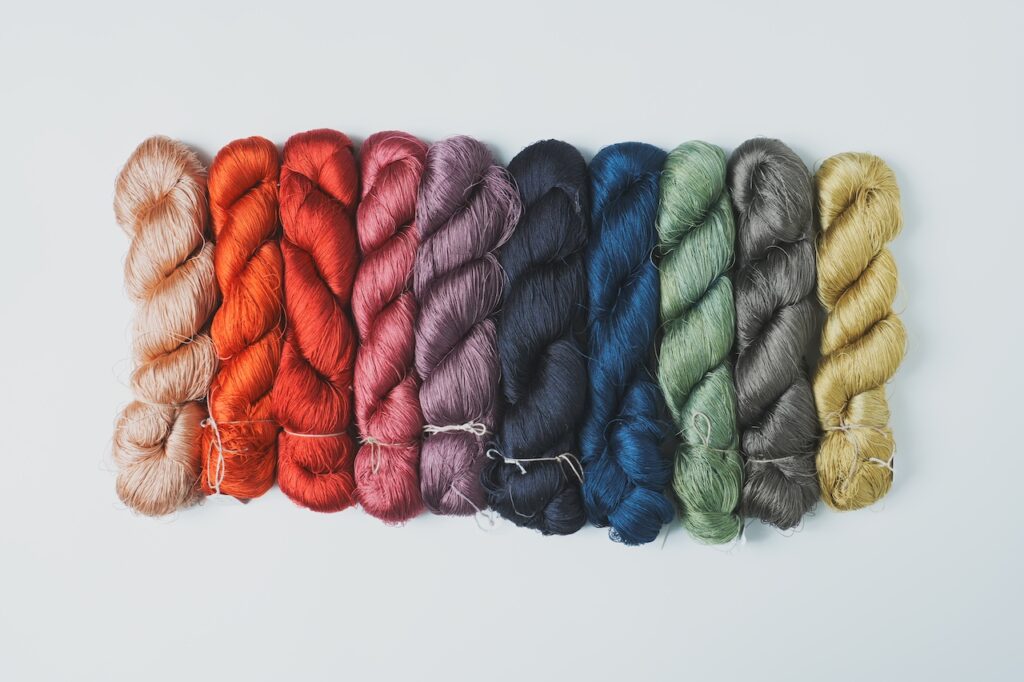
Natural dyed silk yarn: Photo courtesy of Maito Design Works
The Botanical Beauty of Kusa-Zome
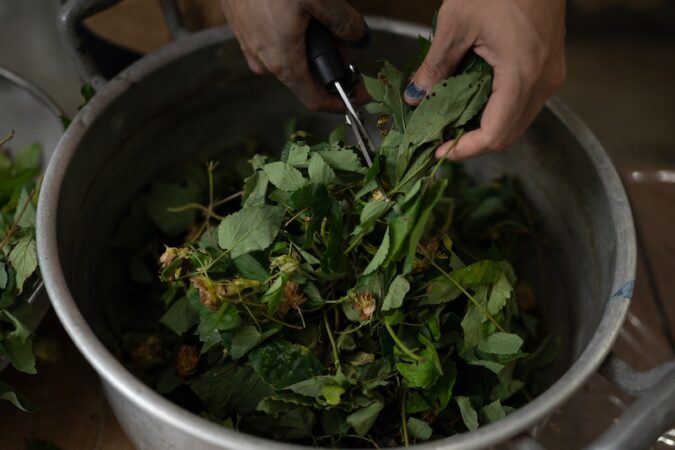
While studying at university, Kuromo became fascinated with these ancient, plant-based dyeing methods. Unlike modern chemical dyes that prioritise speed and uniformity, kusa-zome relies on roots, leaves, bark, and flowers to produce soft, organic hues, with every dyed textile bearing the individuality of nature.
Cutting plants. Photo courtesy of Maito Design Works.
Cotton dyeing using natural dyes. Photo courtesy of Maito Design Works.
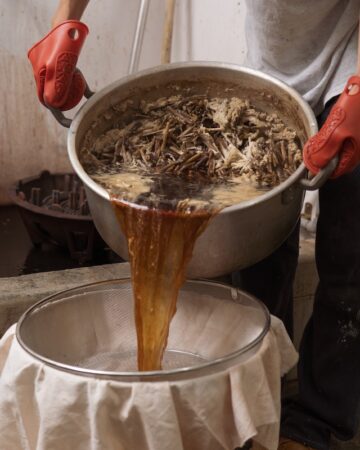
Boiled plant extract. Photo courtesy of Maito Design Works.
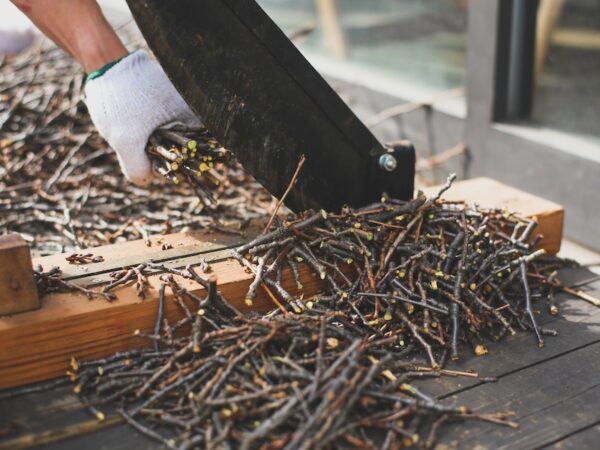
Cherry tree bark being cut. Photo courtesy of Maito Design Works.
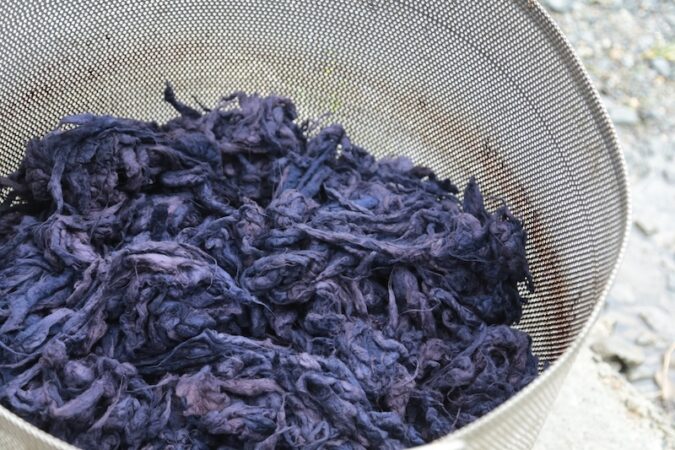
Filtering plants to create dye solution. Photo courtesy of Maito Design Works.
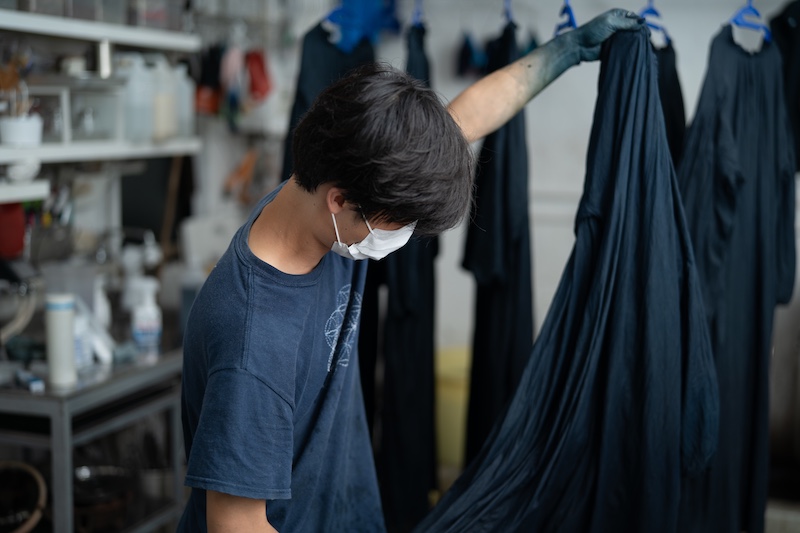
Textile dyeing. Photo courtesy of Maito Design Works.
“I wanted people to not only see my work but also use it,” Komuro explains. Many artisans practice natural dyeing purely for artistic or cultural preservation, but Komuro’s goal was different. He wanted to weave this ancient knowledge into people’s everyday wardrobes, bringing it back to life not just as art, but as lived experience.
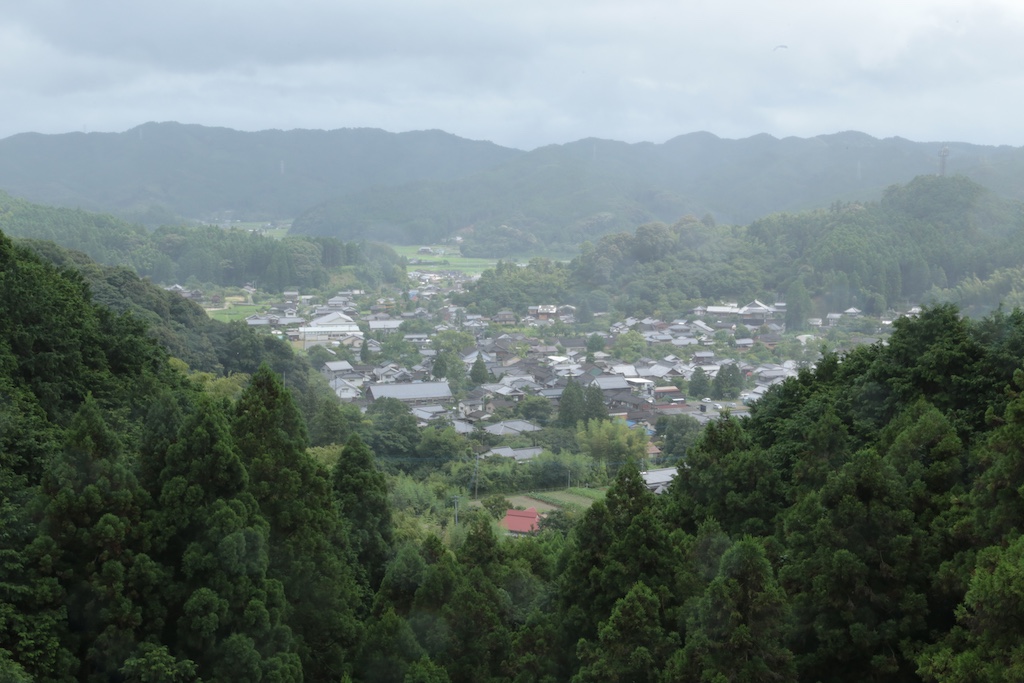
Landscape around Yumesaiku Akizuki natural dyeing studio. Photo courtesy of Maiko Design Works.
Still, transforming naturally dyed textiles into modern fashion posed significant challenges. Traditional dyeing is slow, requires careful craftsmanship, and is typically applied to pre-woven fabrics or completed garments, limiting flexibility in design.
Dyeing with cherry tree bark. Photo courtesy of Maito Design Works.
Crucially, Maito began dyeing yarn, and even raw cotton, before spinning and knitting, rather than dyeing completed garments. This technique not only preserves the integrity and durability of the colours but deepens the relationship between craft, material, and the finished product. “The dyed yarn itself becomes the product,” Komuro says. “It’s colour, embedded.”
What really shapes the character of our fabrics isn’t just the natural dyeing, it’s the quality of the yarn itself,” Komuro explains. “We work with organic cotton, so the garments feel incredibly soft and gentle on the skin. And visually, there’s a richness to them. By using top-dyed mélange yarns, the colours aren’t flat, they’re layered, with subtle variations that give the fabric real depth and dimension.”
Natural dyed silk yarn. Photo courtesy of Maito Design Works.
Where Tradition Meets Technology
Komuro wanted a bridge between the past and the present, a way to honour traditional methods while innovating for contemporary wearability. That bridge came in the form of WHOLEGARMENT® knitting, developed by Japanese company Shima Seiki, a technology Komuro first encountered by chance, while watching a television program.
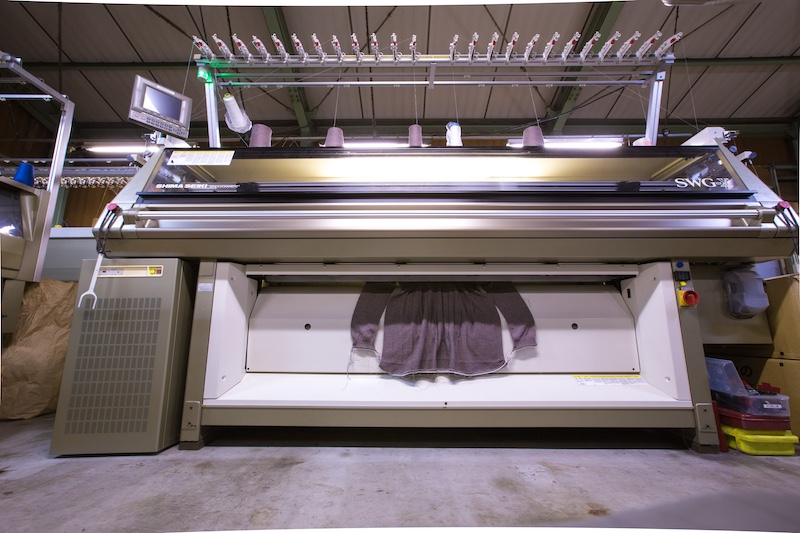
Unlike conventional knitting, where garments are constructed from multiple sewn parts, WHOLEGARMENT® technology creates fully formed, seamless clothing in a single piece. The result? Less fabric waste, greater comfort, and a refined silhouette.
WHOLEGARMENT® Knitting Machine. Photo courtesy of Maito Design Works.
This discovery wasn’t just technical, it was philosophical. Here was a method that could respect the slow, deliberate artistry of natural dyeing while opening new possibilities for scale and wearability. “It provided a way to connect the depth of traditional colour-making with garments that people actually want to wear,” Komuro explained.
In the case of woven clothing, speaking of the challenges, Kumoro explained that it is difficult to complete all processes such as patternmaking and sewing in-house, and there is always fabric waste generated during cutting. “With WHOLEGARMENT®, we’re able to create seamless 3D knitwear that’s not only beautifully constructed but also incredibly efficient,” Komuro says. “There’s no yarn waste, and the process is much simpler overall. Even with a small team, we can maintain consistent production, which, to me, is a direct step toward truly sustainable manufacturing.”
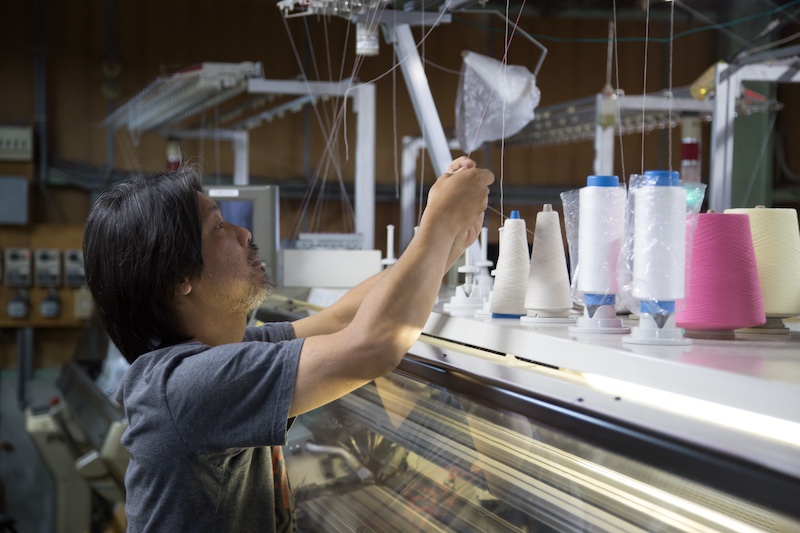
WHOLEGARMENT® Knitting Process. Photo courtesy of Maito Design Works.
The Beauty of Imperfection
I found that one of the most captivating aspects of Maito’s work is his embrace of imperfection. Plant-based dyes, by their nature, are unpredictable. A quest for pink may transform into orange; the same plant may give subtly different shades in spring versus autumn. Rather than resisting this variability, Komuro celebrates it.
“When we make things using only the colours of plants and dyes, I think the colours are quite soft and gentle rather than very bright,” he explains. These gentle, earthy tones stand in quiet contrast to the loud synthetic hues saturating much of contemporary fashion.
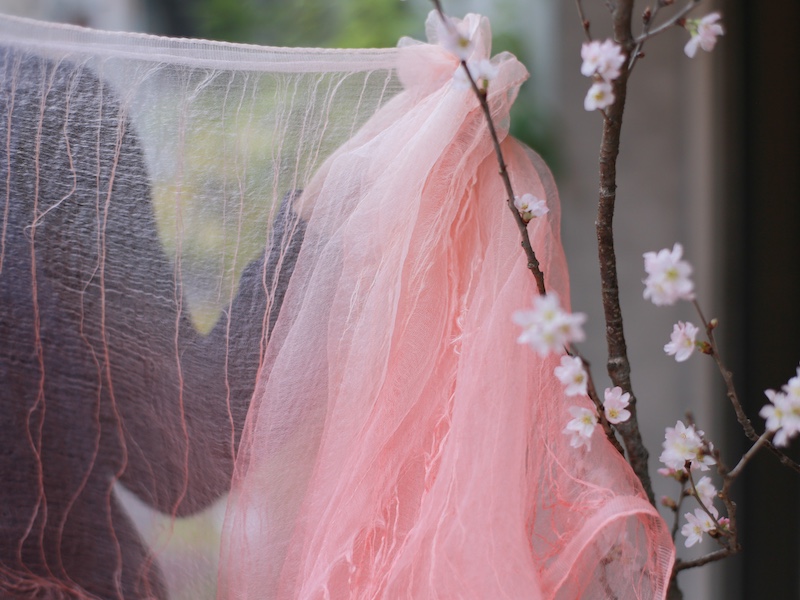
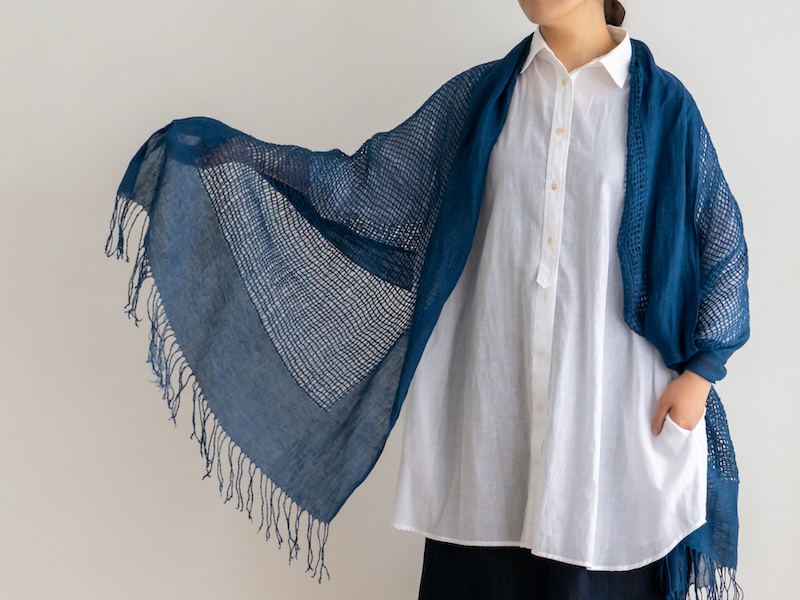
Natural dyed scarf. Photo courtesy of Maito Design Works.
Each garment becomes a kind of living object, an expression of seasonal change, the unpredictability of the weather, the individualities of each dyeing batch. “Rather than mass producing, it’s inevitable that each piece will be slightly different, and that’s what makes it good,” Komuro says.
Kuramae natural dyeing studio. Photo courtesy of Maito Design Works.
Dance of the Old and the New
Maito Design Works sits at the centre of a larger conversation happening within Japanese craft today. Across Japan, artisans are reckoning with the tension between preservation and innovation. From indigo dyers in Tokushima to weavers in Nara, there is a quiet revolution of craftspeople using technology to keep legacy techniques alive, not to replace them, but to give them new relevance.
Yet this dance between old and new is not without controversy. There are those who believe that artisanal techniques should remain untouched, practiced in their purest forms. But Komuro’s approach suggests otherwise: that technology, when applied thoughtfully, doesn’t erase tradition, it extends it. His work doesn’t dilute the meaning of kusa-zome, it amplifies it, offering a new vision of how legacy techniques can carry forward into the 21st century.
Hearing the Craft in His Voice
Speaking with Komuro, it’s clear that this is not just a design project, it’s a philosophy. There’s a profound respect in the way he talks about colour, about fibre, about artisanship. What struck me most was his quiet certainty that this slow, deliberate process was worth it, even in a world obsessed with speed.
“There’s something very beautiful in the slowness,” he says, “because it connects you to everything, the place the plant came from, the hands that spun the thread, the seasons.”
WHOLEGARMENT® Knitting Machine. Photo Courtesy of Maito Design Works.
By collaborating with highly skilled artisans from regions like Gifu and Osaka, Komuro ensures that every step of production; spinning, knitting, and dyeing, is rooted in Japanese craft traditions. His commitment to working with these specialists speaks to a deeper value: that true sustainability is as much about supporting local economies and skills as it is about eco-friendly materials.
While many brands adopt “sustainability” as a buzzword, Maito embodies it as a lived practice. It’s not perfect, and it’s not fast, but it’s deeply intentional. And perhaps that’s what makes it revolutionary.
For Maito, fashion is not just about producing garments. It’s about creating a tangible link between the past, the present, and the possibilities of the future. His pieces are not just clothes; they are stories, woven, dyed, and worn. In a fashion landscape crowded with trends and disposability, Maito Design Works offers a quieter, more profound alternative: garments inspired by time, place, and meaning.