Sewn in Stockport: Emiko Studios and the Rise of a New Creative Hub
Emiko Studios and the Rise of a New Creative Hub
By Molly Granger and Liam Wilson

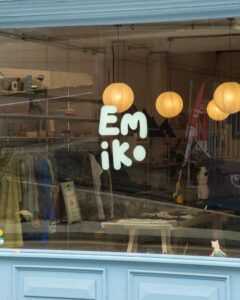
If you haven’t already seen, Emiko Studios is tucked away under Stockport’s Underbank. A place bustling with many independents and quickly becoming a hub for music, fashion, and food, even lovingly being dubbed the “new Berlin” by Manchester DJ Luke Unabomber.
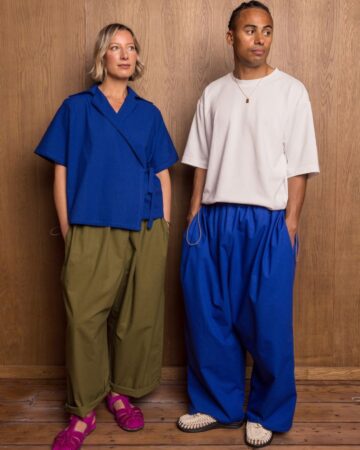
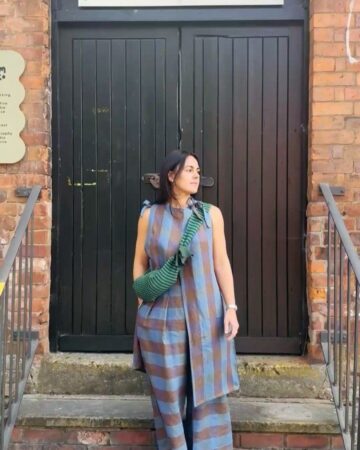
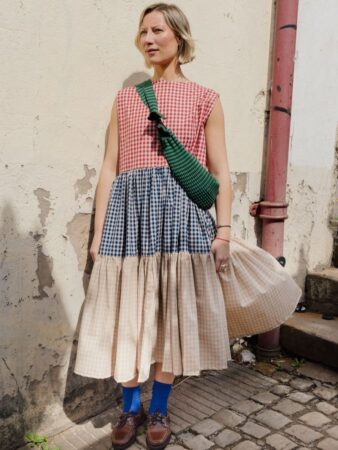
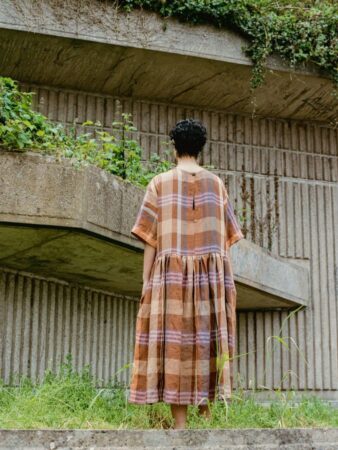
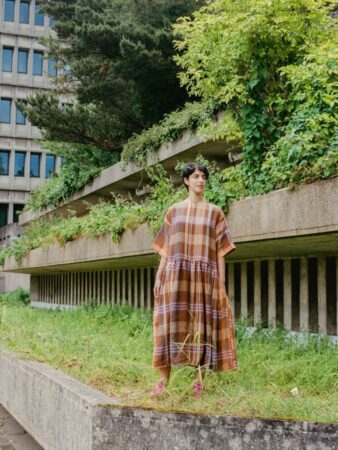
A fitting place for Coral Murphy to put up her shop, Emiko Studios produces Made in England clothing heavily inspired by Japanese and vintage workwear. The brand began when Coral started making clothes for her daughter in a tiny little flat in Hong Kong, before moving to Manchester and quickly outgrowing her home space as Emiko grew.
We recently visited Coral at her micro-factory turned event space, Miru Mills, for a chat about all things Emiko: what it means to be an independent in the UK, the creative communities in Stockport and Manchester, and an honest conversation about challenging traditional fashion systems. Operating as a small yet ambitious brand, Emiko Studios focuses on ethical production and sustainability. Unlike the fast-paced environment of large-scale fashion manufacturing, the brand embraces a different approach, prioritising both quality and workplace atmosphere.
At the heart of Emiko Studios is a clear commitment to sustainability. From the outset, Coral focused on using natural or recycled fibres, steering clear of plastics, a decision shaped by her time working in fast fashion and a desire to do things differently. The brand grew from that foundation, sourcing fabrics from British mills and drawing inspiration from Asian silhouettes and vintage utility wear. Every piece reflects an eco-conscious ethos, grounded in ethical sourcing and thoughtful design.


Small scale, Big Impact
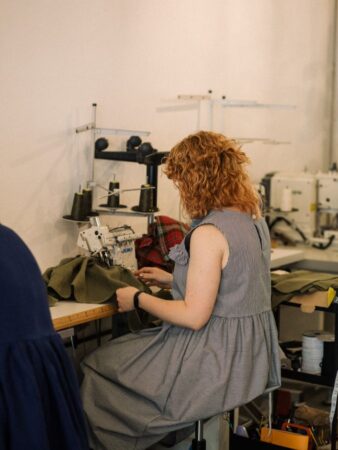
“We are a small business, but we are also making about 50 to 80 garments a week,” Coral shared. “We’re generating a lot of sales.” Yet despite their modest team size, Emiko’s output is impressive, proving that small-scale production can still be efficient and successful.
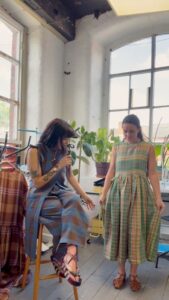
More than just a clothing brand, Emiko Studios isn’t just about producing clothes, it’s about cultivating a positive and enjoyable workspace. “I don’t want it to be an atmosphere where we’re all just whizzing at the machines,” Coral said. “Sometimes we put the TV on, we put a documentary on or something. We have a chat all the while we’re sewing. I want it to still be nice and chilled.”
This vision of a relaxed yet productive studio environment speaks volumes about the values at the heart of Emiko. It’s a quiet resistance to the high-pressure, fast-paced norms of the fashion industry, and a reminder that meaningful work doesn’t have to come at the cost of mental or emotional wellbeing. Coral’s approach imbues a sense of community and calm, where conversation and creativity flow side by side.

A New Kind of Factory Floor
Dating back to the 16th century, Stockport has played a quiet but significant role in Britain’s textile story, from early rope making and mechanised silk mills during the industrial revolution, to becoming part of the booming northern cotton industry, and later a global hub for hat production in the mid to late 19th century.
Today, that legacy is being reimagined as the towns’ historic mills are transformed into vibrant spaces for art, independent brands, restaurants and creative collectives, breathing new life into Stockport’s rich industrial past.
Operating out of one of these historic mills, Emiko is proud to be part of British manufacturing’s revival: “There’s a lot of history. This mill used to make silk and cotton, and then it made shirts, and then it was a sweet factory.” This revival isn’t just about preserving heritage; it’s also about reshaping the future. As the fashion industry begins to decentralise from traditional power centres like London, places like Stockport are proving that innovation and creativity thrive in local contexts.
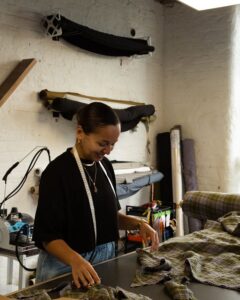
“So, I think it’s really lovely that we’re supporting British manufacturing again here. And there are not many places that are doing it like this.” The small factory setting not only keeps production local but also allows for a hands-on approach to garment-making. “I like how everything’s produced in this small factory together. We’re all part of making the clothes together, and it also gives us the opportunity to tailor garments.”
The team at Emiko Studios is far smaller, though Coral does think it’s about striking the right balance. “You need people, but you also want to keep it minimal, so again, for your brand, you can sort of stick to what you want it to be.’’
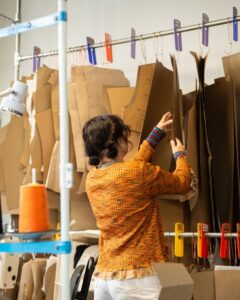
This in-house production model also allows for a more personal connection with customers, especially with Emiko’s bridal range. “I think that’s been really lovely making everything in-house because the bride can come in, and we can fit it to them.” This level of care and customisation is rare in the fashion industry, making Emiko Studios stand out as a brand that values craftsmanship, sustainability, and a human touch.
Crafting Community Through Clothing
A combination of a “really nice community of independents” and a love of the “old heritage and architecture,” both things which Stockport wears proudly on its sleeve, spoke to Coral, and was fitting for a brand of her size. Rooted in Stockport’s heritage and inspired by its growing network of independents, Coral found resonance in the town’s creative energy.
Coral cited Where the Light Gets in and Yellow Hammer as key inspirations, spaces she admires for their creativity and community focus.
Where the Light Gets In is an experimental restaurant that focuses on seasonal food, while Yellow Hammer is a pottery studio, bakery, and restaurant. Both are explorative spaces that engage conversations and draw community together in new ways. ‘’They hosted some amazing events last year and collaborated with MO6B, a café, bar, and record shop in the heart of Stockport,” Coral said. “Whatever they’re doing, they’ doing it right.
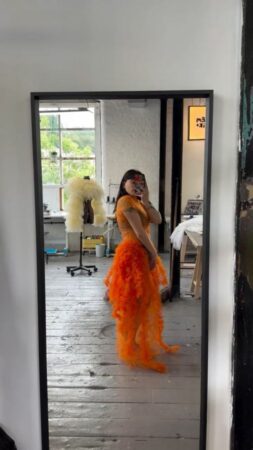
Inspired by this energy, Coral and her team are now exploring opening up Miru Mills, testing new ways to bring people together. So far, they’ve hosted workshops and sewing classes, and most recently, they’ve started offering the space for others to work in.
“On social media, a lot of independents communicate, collaborate, and ask for advice,” Coral explains. “What I imagined for this space was a place where those creatives could physically be here, where we could network, share ideas, and actually work together.” It’s about building a space where creativity and community can thrive side by side.
Yet, the challenge lies in securing the funding needed to manage initiatives like this. Time is one hurdle, but financial support from the council and other providers is sparse and highly competed. Roadworks obstructing shops and the council’s major focus on new development have created a feeling amongst many independents of “being left behind.” Coral noting that a lot of independents have had to close which is a concern to the future of her brand.
“To be honest, right now, it’s really hard.”
Whilst the development is bringing new life into the area, it also poses a challenge in trying to organise events and markets that support independent businesses to survive. Rising costs, stricter planning requirements, and the loss of flexible public spaces have made it harder for smaller traders to find a foothold. Despite Coral being friends with and personally supporting many of the independents nearby, the reality of navigating these changes can be disheartening. “It kind of gets to a point where you don’t really know what else you can do.”
Resilience in the Face of Reality
Still, resilience is woven into the fabric of Emiko Studios. The brand is redefining what it means to be an independent fashion label, navigating the industry with adaptability and grit. After facing a significant financial loss last year when a marketing company scammed them for £17,000, Emiko’s founder was forced to make major changes to keep the brand alive.
“Yeah, sort of like trying to come back from that on your own, figuring out what you can do instead. I do take it very personal. I’ve always taken it personal.”
This emotional connection to the brand runs deep. For Coral, Emiko Studios is not just a business, it’s a personal journey shaped by passion, persistence, and a hands-on approach to every challenge. “If you’re in the industry with huge problems, the owner or the designer will never see anything like this. They’ll never have to do these things.” Unlike larger fashion houses, where designers are often detached from the day-to-day realities of production and sales, Emiko operates with a small, tightly knit team.
This intimate, hands-on approach is exactly why supporting small businesses matters. The craftsmanship involved in producing garments from scratch is impressive and often leaves you pieces that are built to last, items that gather stories and meaning over time, becoming part of your personal history as you wear them.
Building Beyond the Blueprint
This close-knit approach allows Emiko to constantly evolve in response to the challenges they face. She explains “It’s had to evolve constantly because you can’t really have a plan in place.” The ‘plan in place’ was initially wholesale as their main sales strategy; the brand had to pivot when that model didn’t work. “You have to constantly evolve. If something doesn’t work, you can’t just pack in the idea,” Coral explained.
This was reflected in her experience at Paris Fashion Week. Traditionally being the centre of the fashion calendar, like many brands, Coral points out the fatigue many feel in the industry. She talks about working hard to build a brand and establish it, just to be told that you need to keep going year on year before you see any success. Unfortunately, she argues, the reality of this is one which isn’t financially viable for smaller brands. But this is a cycle Coral is no longer willing to accept, instead a more community-driven approach emerged from Paris, a new appreciation of the community within the showroom, through building friendships with other vendors.
This helped Coral to re imagine her approach to the system, with pop-up spaces becoming an important part of Emiko’s strategy. “I think what I took from that experience was if we had a pop-up space where people could shop the product at the same time as buying, then I think it would be more beneficial because you’re not just standing there, hoping for the best. “This adaptability and desire to take things into their own hands is what keeps Emiko moving forward.
“This is my whole identity. If I didn’t have this, I don’t know what else I would do.”
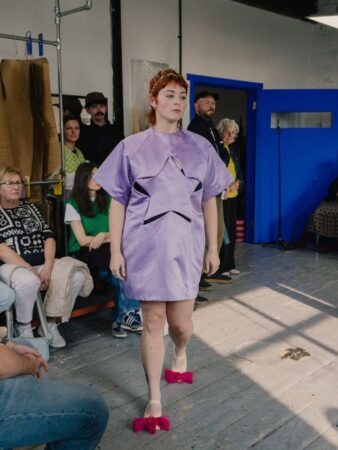
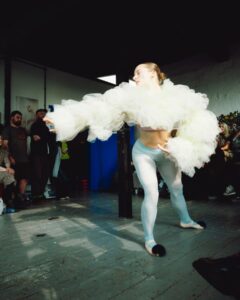
It’s this deep-rooted commitment that allows the brand to thrive, even in an industry that often feels stacked against smaller, independent creators. Coral’s way of doing business works, a physical store and major success in the US has meant over the past couple of years it’s scaled enormously – she quotes 300% year on year. The success of the brand since we spoke has continued, with Miru Mills fully open for events of all kinds, being used for runways, podcasting, workshops and much more.
Choosing to do things differently isn’t an easy route, but for many, like Coral, it brings a renewed sense of energy and enjoyment to working in an increasingly frustrating industry. “It’s also just not enjoyable. You need to be doing stuff that you want to do.” Coral’s approach to brand-building is refreshingly nonconformist. Rather than adhering to a rigid blueprint, she champions authenticity and intuition, encouraging others to carve out their own paths.
“Don’t feel like you need to follow the formula of how to build a brand, do things on your own terms, because it doesn’t work for everybody.”
Redefining the Narrative
Reflecting on what she feels could help fill the gap in education around running your own business, Coral shared: “it would be good to have some kind of business mentorship because a lot of students will want to become designers. That’s what they are studying.”
Sourcing fabric, managing social media, handling finances, and building a website are all tasks that are easily overlooked from a designer’s perspective. Coral tells me she’s had to figure it all out on a whim, herself. She wishes there was a free or affordable help system that brands could access for advice on these kinds of things, something practical and accessible for independents trying to do it all.
It was clear by the end of our time with Coral, that Emiko’s journey is a testament to the power of trusting your instincts and redefining success on your own terms. In an industry often driven by trends and formulas, Coral stands out by staying true to her vision. By embracing constant evolution and staying true to their personal connection with the craft, Emiko Studios is challenging traditional fashion systems and proving that success isn’t defined by scale, but by creativity, resilience, and community.